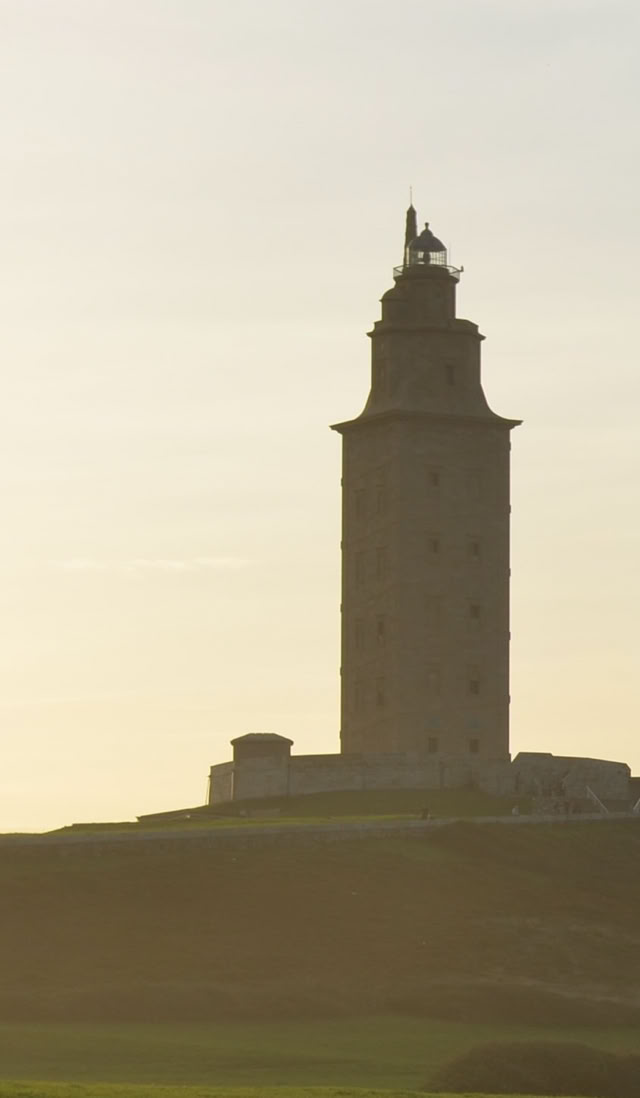
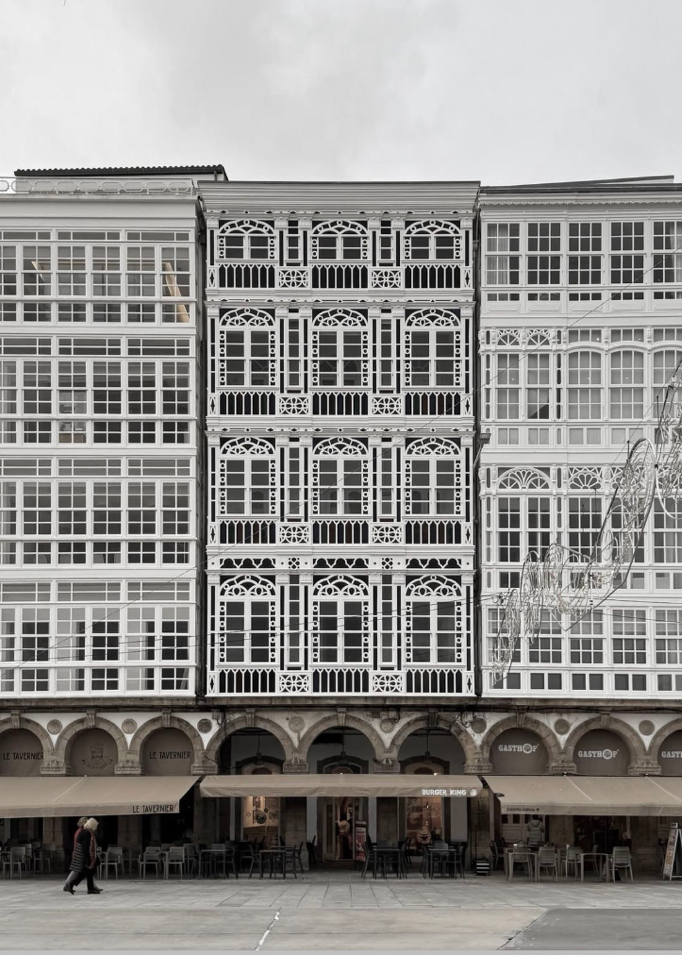
If I were to introduce myself as a landmark of A Coruña I would definitely be a window from the Galerías, a defining element of the architectural style that shapes the city’s buildings along the coastline. They are more than a structural element, they connect people with something beyond themselves.
Growing up in A Coruña means being especially linked to the Atlantic Ocean that surrounds the city and that every window in the coastline of A Coruña reflects. That constant presence of the sea naturally becomes part of how you see and understand your environment. This reflects how I relate to the spaces I am in and how I tend to be aware of what is happening around me and adjust how I engage depending on the people and dynamics around me, while maintaining my essence and my way of engaging with people.
This connects me and the Galerías specifically with the theme of the session: ‘Beyond Horizons: Into New Waters’, since the Galerías constantly face the sea and I am interested in engaging with new environments and perspectives while not forgetting where I come from and the experiences that have shaped me.
For me, uniqueness is based on how you approach achieving your aims. I believe that different people can reach similar outcomes, but the path that each one of them follows to reach them is what defines their role.
I would describe myself as a highly committed person, I don’t like leaving things halfway done. Once I decide to take on a task or responsibility I feel a strong need to complete it to the best of my ability. This can result in both a strength and a challenge, pushing me to maintain high standards but opening the possibility to be excessively demanding with myself.
In my approach to work, I try to remain calm and structured. When tasks become complex, I tend to break down larger tasks into smaller parts, allowing me to maintain consistency throughout the working process. This helps me avoid getting overwhelmed and ensures that I can take into account every aspect of my chairing, like supporting delegates and maintaining the committee on schedule.
The atmosphere in a committee is key to building a space where every delegate feels comfortable and truly bonds with their colleagues. From my point of view, the quality of a committee’s work is more productive when delegates start feeling ownership over the process and understand well how the outcome should look. That, for me, is the role of a chairperson, to guide delegates on how their work’s result should be and to state a path to create it, but letting them fill it with their own ideas and self-moderation.
Ultimately, what makes me unique is the combination of commitment, structure, and adaptability that I bring into every space I am part of. I approach chairing not only as a responsibility to achieve results, but as an opportunity to shape an environment where people can grow, connect, and produce meaningful work together.
What makes you
truly unique within EYP, both as a person and in your approach to work?
I really resonate with the vision’s concept of having an open variety of ways of chairing within the session. I value the opportunity given to every committee to be shaped by the people within it, rather than by one fixed model of chairing. Therefore, I understand creativity in chairing not as standing out but as finding the most authentic and effective way for a committee to function according to its own dynamics.
The freedom to choose both the topic and the structure of the topic overview is, to be honest, a huge responsibility. On the other hand, I would approach it as a possibility to fully own my chairing both before and during the session. I would approach the topic overview structure as an ‘experience’ for delegates by creating intentional gaps, creating curiosity in them, and asking them to research the topic and look for it, making their understanding of the topic more self-built rather than passively received. Although, I would have the complete version of it just in case nobody found it until the end of teambuilding day provide them with it to ensure a full understanding of the topic before starting committee work.
I try to enter a session with multiple ways of approaching the same challenge so that I can adapt to the needs of the committee rather than forcing it into a predetermined path. From my point of view, a chair’s input to delegates must be inversely proportional to their output and ownership of the process. I root my approach in trusting delegates’ ability to engage critically when they are given the space to do so. Therefore, in this case, freedom is not only given to me but transferred to my delegates by providing more help when energy drops or stepping back when they take ownership naturally, and guiding them when structure is needed to keep the process productive.
Ultimately, I want my chairing to reflect a balance between structure and freedom where delegates feel confident enough to contribute, and responsible enough to shape their own workflow.
How do you approach the vision’s emphasis on creativity and freedom in Chair’s work, both before and during the session? How would it be reflected in your way of chairing?
Tell us about a difficulty you encountered during a previous chairing experience. Share a brief plan on how you handled the situation, or how you would handle it if faced with a similar challenge again.
Looking back I identified three interconnected mistakes that compounded the challenge I faced:
A. The schedule was excessively tight and lacked sufficient buffer time to account for unforeseen difficulties during the session. Also, I didn’t have a designated time to re-braimstorm, which in the end I had to do it and that made me go extremely behind schedule.
B. When the pressure increased, I attached to the original plan instead of reassessing priorities and omitting non-essential parts of the schedule.
C. By externalising my stress, I allowed my delegates to perceive that something was not working, which affected the atmosphere I was responsible for maintaining.
At the time, I handled the situation by stating strict deadlines for each task and breaking up the committee into different groups in order to simplify the discussions and reduce the time spent on disagreements. While this approach allowed us to finish the work on time, it also resulted in a weak resolution at the resotyping stage, forcing me to rebuild large parts of it myself. Looking back, I realised that in prioritising efficiency, I had limited the space for deeper discussion and delegate ownership. Therefore, there are several aspects I would now reconsider both in my preparation and in my reaction to a similar challenge:
1. When preparing the schedule I would not establish specific times on the day for each one of the tasks, but I would consider the duration of each one of them and dedicate several buffer times for every part of the resolution creation process.
2. Also when scheduling I would try to have an idea of what tasks should be prioritized over others and what tasks could be omitted if the situation ocurred to me again. If this happened, I would now be more conscious of the need to prioritise and reschedule tasks.
3. In terms of my own presence during the session, I would be more conscious of how I communicate pressure to the committee. When running behind schedule, I believe it is more effective to remain paced rather than stressed, offering clarity over urgency to ensure a stable working environment.
CONTACT INFO